I taught the course of Ephemeral Architecture for four consecutive semesters from January 2015 to December 2016, a fact that allowed the course to build on past experiences. In January 2015 was the first time that the course was held and, therefore, I had the opportunity to completely define its syllabus.
The course followed a research-based, situated-learning approach, whereby students were in constant contact with the site of their experimentations and each small task was part of the final evaluation along with a final project.
In its first edition, the teaching and learning activities were conceived in close collaboration with the students, who ideated as a series of activities to appropriate a public square within the university. The course was accompanied by different readings, including Michel Foucalt’s Heterotopias and Marc Auge’s Non-Places and, upon the suggestion from one of the students, we invited a professor from the School of Philosophy to further discuss these readings. To conclude the course, students co-created a booklet that documented the activities and related them to the readings.
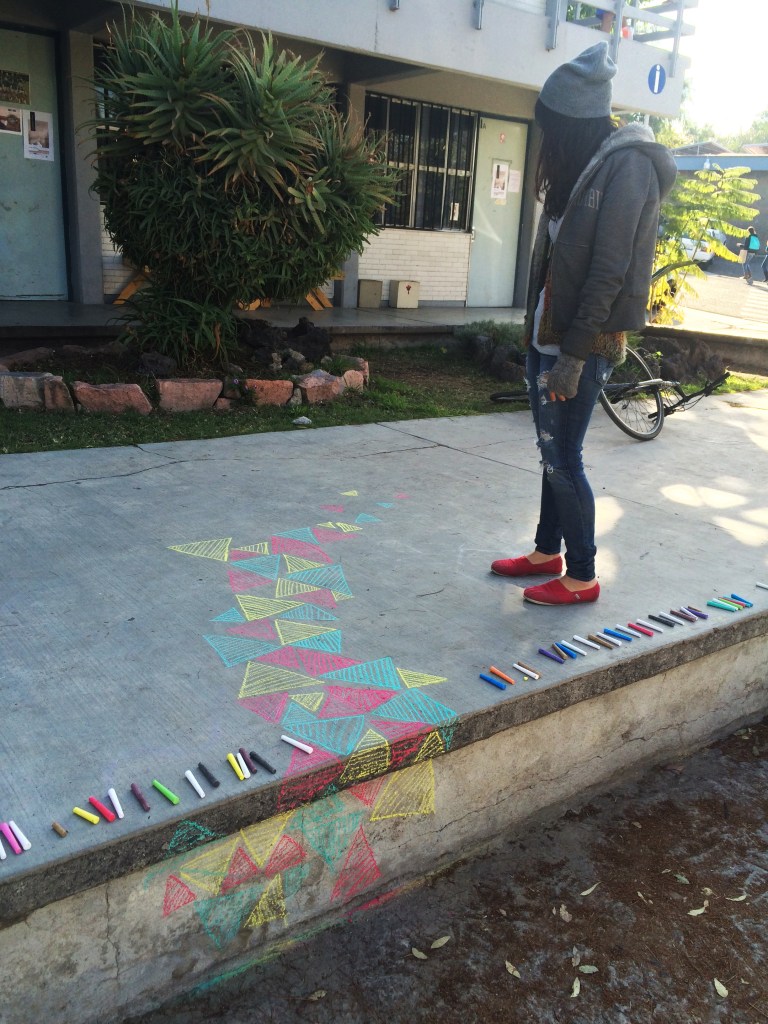
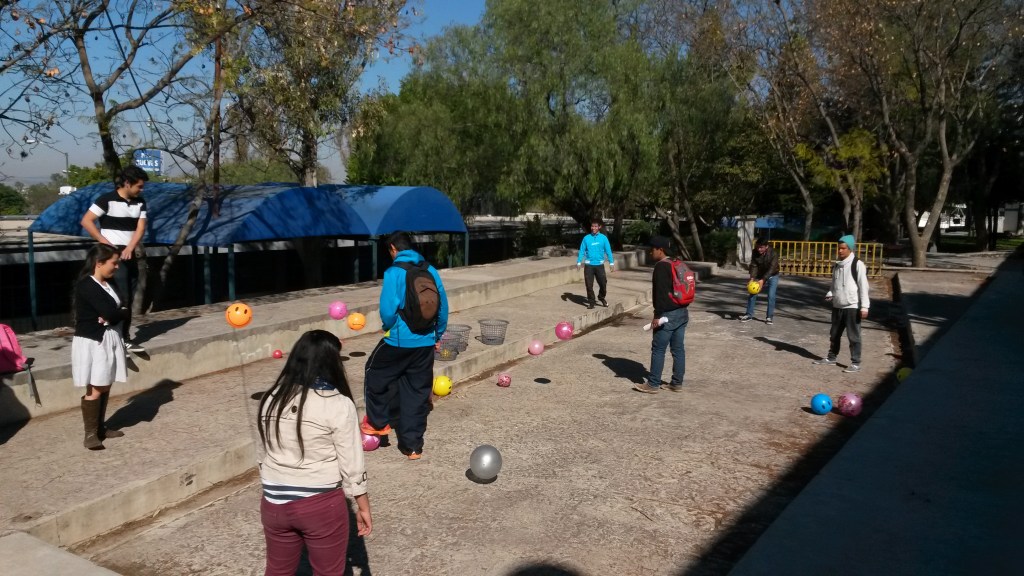
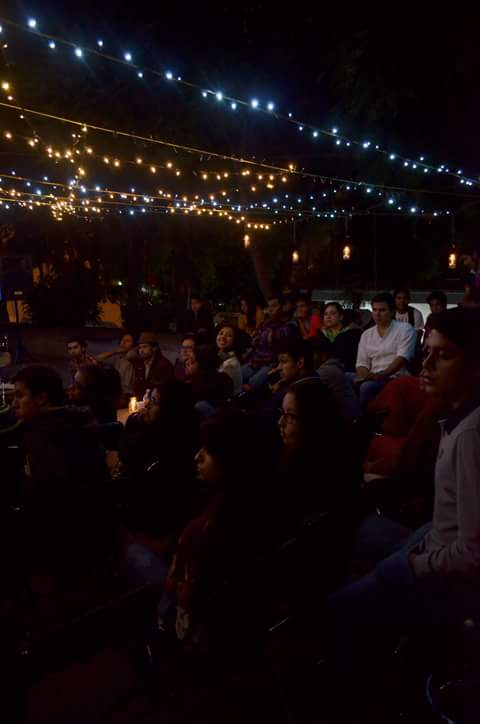
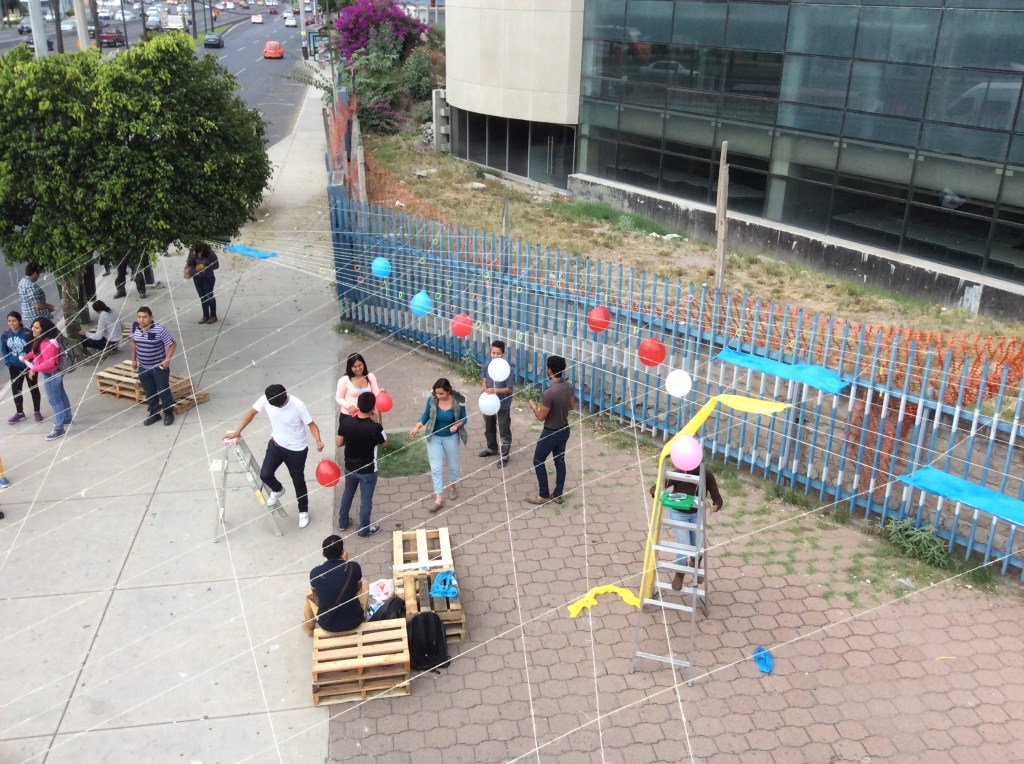
Inspired by the first edition of the course, in the following semesters, I continued to organize discussion sessions, inviting a few teachers and their students. After one of these sessions, I was approached by a group of students, who were not part of the course, who asked me to help them organize a discussion forum open the whole school of architecture. These students created the space where the event was held and my task was to define the topic and to moderate the discussion. Entitled Construir o No Construir (To Build or Not to Build), it became the first of (so far) three thought-provoking discussion forums were organized. Figure 2 illustrates some of the activities of the course as well as the discussion forum.
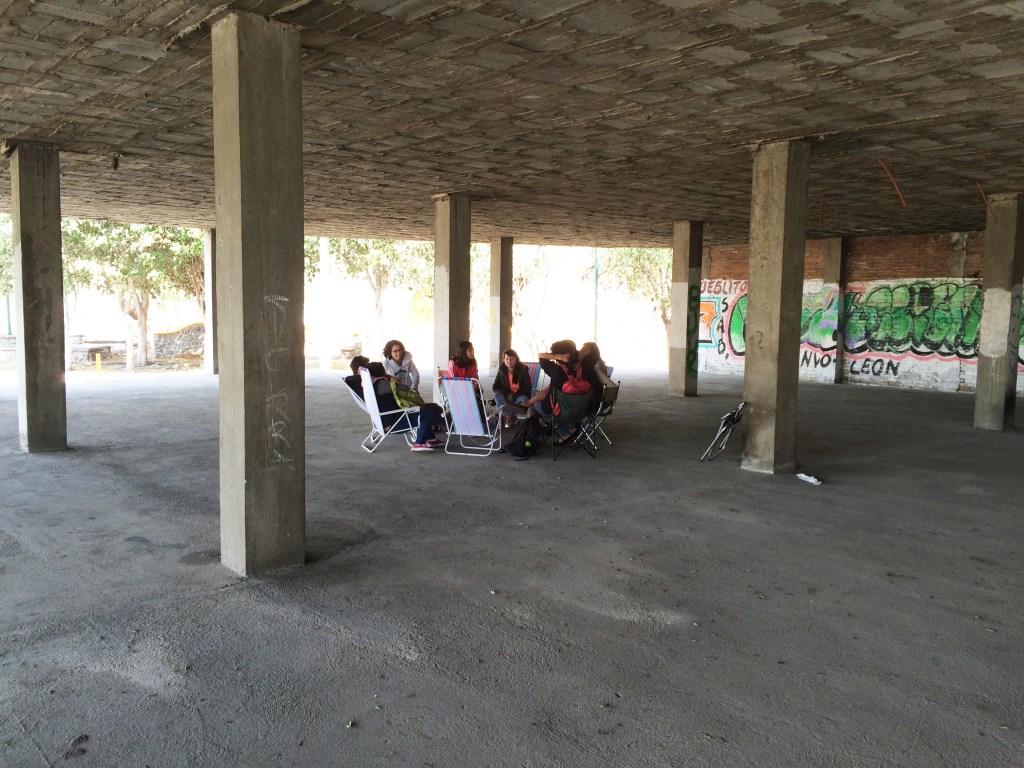
In the last two semesters of the course, we took the experimentations beyond the boundaries of the university into abandoned, unfinished constructions in the city. Moving the course outside the university opened the possibility to explore the life of the city through different activities, utilizing visual methods to document urban phenomena. Furthermore, we began to have a few contact sessions in unusual locations, such as an abandoned building (Figure 1) and the ramp of an underground parking house.

 dalia milián bernal